If you’ve got SRM 5.5 installed and you want to get the new SRM 5.8 code into your environment, don’t worry. The upgrade process is pretty easy to manage. The important thing to note is the upgrade order and of course your compatibility matrix. Remember that you need vCenter 5.5 U2 or higher to get SRM 5.8 working.
Upgrade Order
- Ensure your vCenter Server and Web Client are on 5.5 U2 or higher in the protected site. If not, upgrade them!
- Upgrade vSphere Replication on the protected site to 5.8 if you’re using one.
- Upgrade SRM on the protected site to 5.8
- Upgrade your SRA on the protected site if you’re using one.
- Ensure your vCenter Server and Web Client are on 5.5 U2 or higher in the recovery site. If not, upgrade them!
- Upgrade vSphere Replication on the recovery site to 5.8 if you’re using one.
- Upgrade SRM on the recovery site.
- Upgrade your SRA on the recovery site if you’re using one.
- Verify the conneciton between your sites is valid, protection groups still exist and recovery plans are in tact.
- Upgrade ESXi servers on the recovery site
- Upgrade ESXi servers on the protected site
- Upgrade VMware Tools.
Install
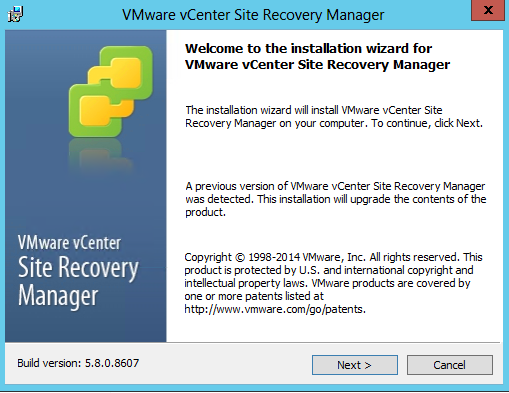
Run the installer on the SRM servers. The installer should detect that SRM is already installed an that an upgrade will be performed.
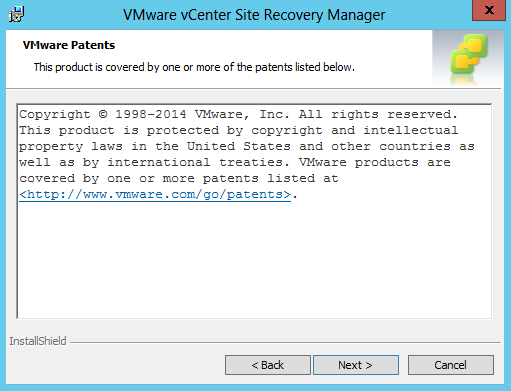
Just like an full install, we’ll get some legal patent information.
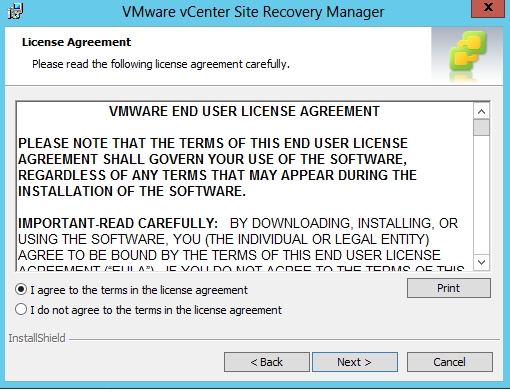
 Agree to the terms of use.
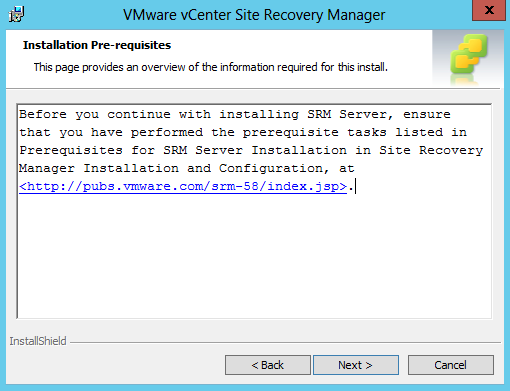
Just like with a full install, you’ll be given the opportunity to look at the prerequisites again.
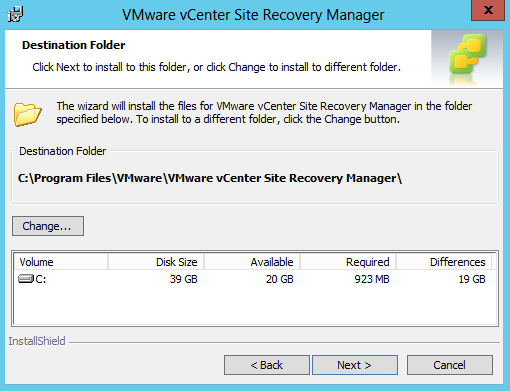
Update the install location if you wish. Click Next.
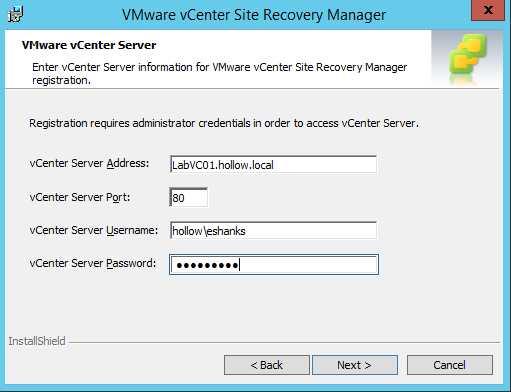
Enter the vCenter credentials to register with the vCenter server.
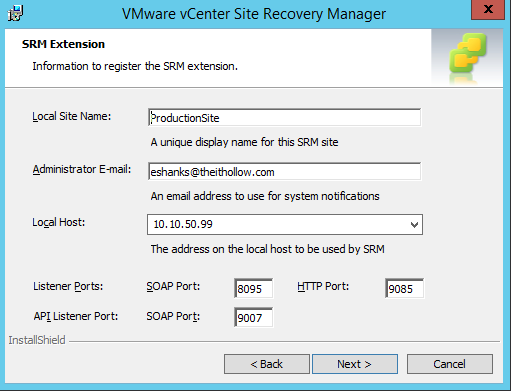
Update the Administrator email, local host and any ports if you wish. The local site name will not be editable. Click Next.
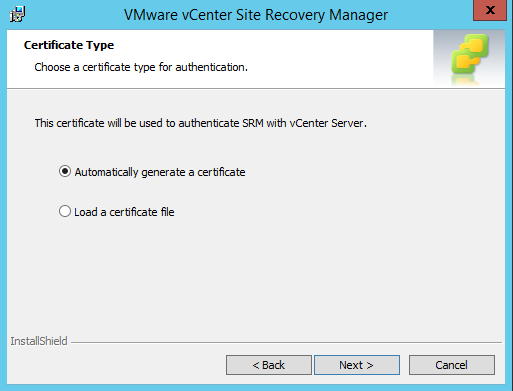
Choose whether to use the automatically generated certificates or load a custom certificate. Remember that if your vCenter uses a custom certificate, you’ll need to use a custom certificate in your install of SRM as well.
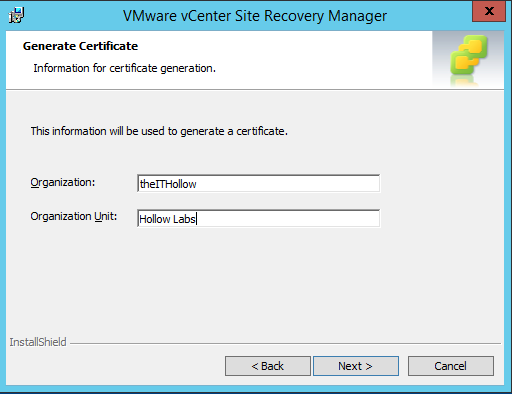
Enter some information to generate the certificate, or browse to your certificate if you’ve got a custom one.
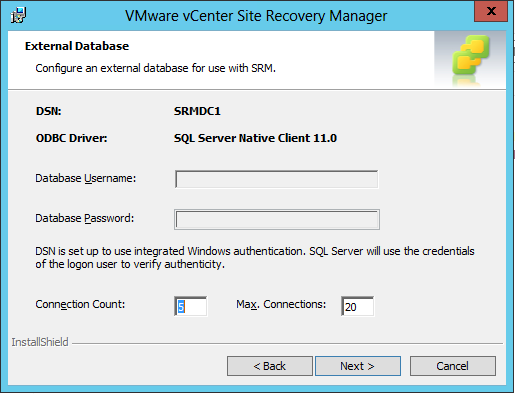
You may change the database connection count if you wish. The DSN will be hard coded.
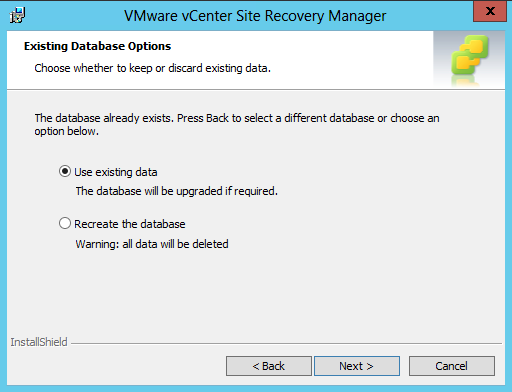
Important!!!! Leave this setting at “Use existing data” or you’ll erase your current SRM config.
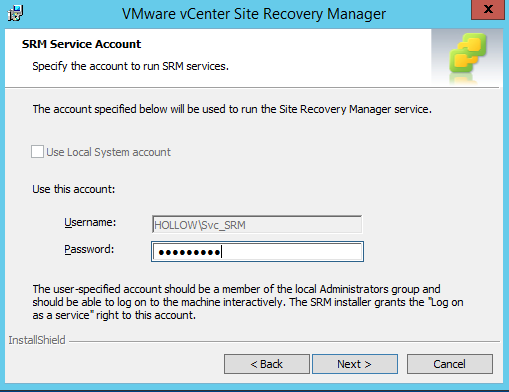
Enter your service account information. Click Next.
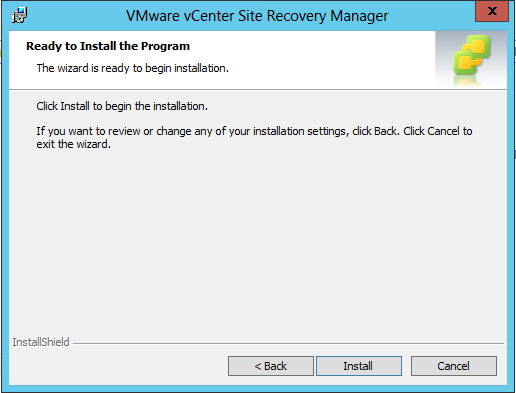
Enjoy the upgrade process by clicking Install.
Summary
The upgrade is pretty easy as long as you’ve got your certificates in place and the prerequisites done. Upgrading vCenter and the replication appliances will probably be the bottleneck.